


Description
What is a Liver Function Test (LFT)?
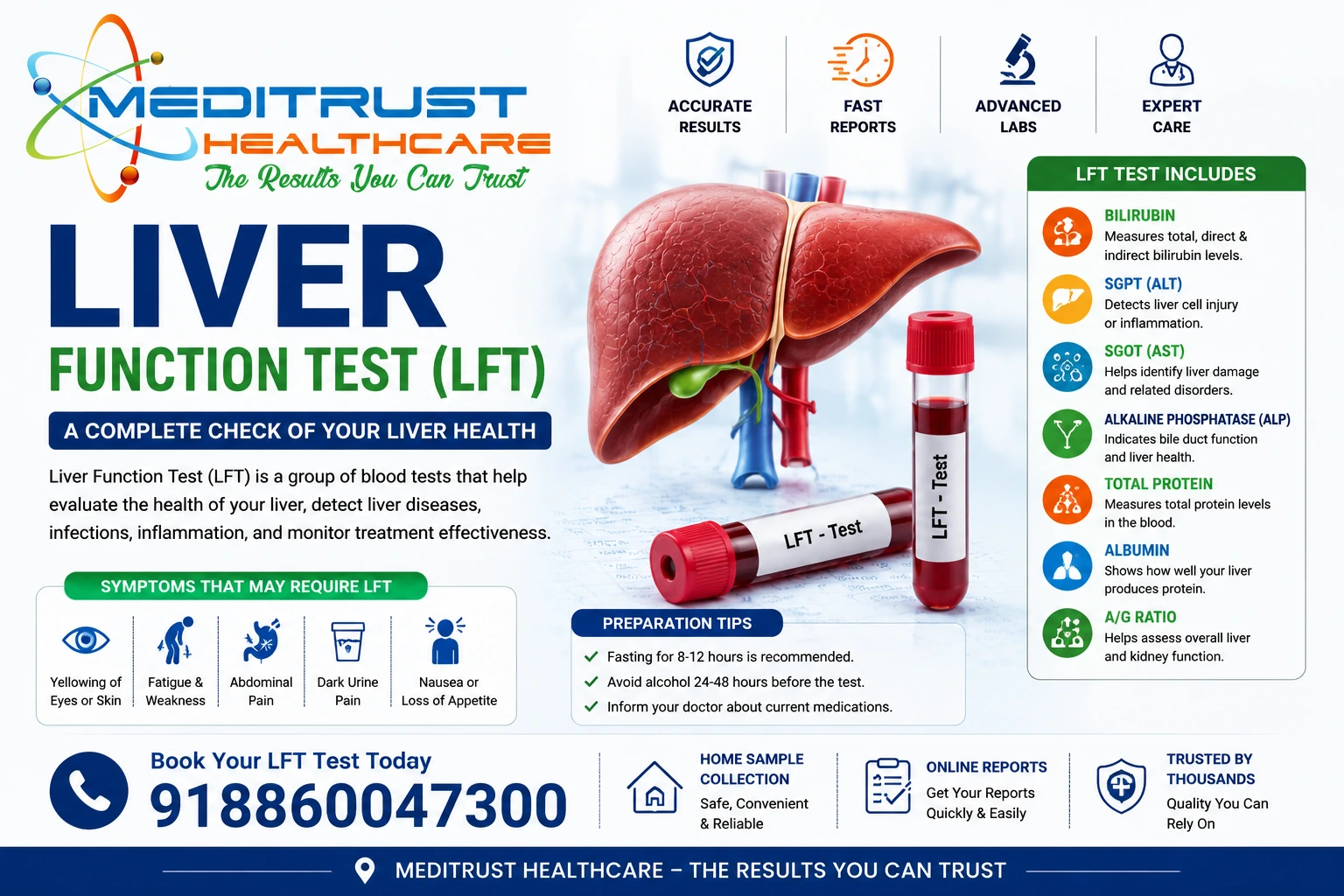
A Liver Function Test (LFT) is a group of blood tests used to evaluate the health and functioning of the liver. These tests help detect liver damage, inflammation, infections, and other liver-related disorders.
The liver performs several essential functions in the body, including:
- Detoxifying harmful substances
- Producing proteins
- Storing nutrients
- Producing bile for digestion
- Regulating metabolism
An LFT helps doctors determine whether the liver is functioning normally or if there are signs of liver disease.
Why is an LFT Test Done?
Doctors recommend Liver Function Tests to:
- Detect liver infections
- Diagnose liver diseases
- Monitor alcohol-related liver damage
- Evaluate jaundice
- Assess medication side effects
- Monitor chronic liver conditions
- Check overall liver health
Components of Liver Function Test (LFT)
An LFT panel includes several important blood parameters.
1. Bilirubin Test
Bilirubin is a yellow pigment produced during the breakdown of red blood cells.
Types of Bilirubin
- Total Bilirubin
- Direct Bilirubin
- Indirect Bilirubin
Normal Bilirubin Range
- Total Bilirubin: 0.1–1.2 mg/dL
High Bilirubin May Indicate:
- Jaundice
- Liver disease
- Gallstones
- Hepatitis
2. SGOT / AST (Aspartate Aminotransferase)
AST is an enzyme found in the liver, heart, and muscles.
Normal Range
- 5–40 U/L
High AST Levels May Suggest:
- Liver inflammation
- Alcoholic liver disease
- Hepatitis
- Muscle injury
3. SGPT / ALT (Alanine Aminotransferase)
ALT is mainly found in the liver and is a key marker of liver damage.
Normal Range
- 7–56 U/L
Elevated ALT May Indicate:
- Fatty liver disease
- Viral hepatitis
- Liver injury
- Medication toxicity
4. Alkaline Phosphatase (ALP)
ALP is an enzyme linked to bile ducts and liver function.
Normal Range
- 44–147 IU/L
High ALP Levels May Suggest:
- Bile duct blockage
- Liver disease
- Bone disorders
5. Total Protein
This test measures total protein levels in blood.
Normal Range
- 6.0–8.3 g/dL
Abnormal levels may indicate liver or kidney disorders.
6. Albumin
Albumin is a protein produced by the liver.
Normal Range
- 3.5–5.0 g/dL
Low Albumin May Indicate:
- Chronic liver disease
- Malnutrition
- Kidney disease
7. Globulin
Globulin proteins help fight infections.
High Globulin Levels May Suggest:
- Chronic inflammation
- Liver disease
- Immune disorders
8. A/G Ratio (Albumin/Globulin Ratio)
This ratio helps evaluate liver and kidney health.
Symptoms That May Require an LFT Test
Doctors may advise an LFT if you experience:
- Yellowing of skin or eyes (jaundice)
- Fatigue
- Abdominal pain
- Dark urine
- Nausea or vomiting
- Loss of appetite
- Swelling in legs or abdomen
- Unexplained weight loss
Preparation Before Liver Function Test
Fasting
Fasting for 8–12 hours may sometimes be recommended.
Inform About Medications
Certain medicines can affect liver enzyme levels. Inform your doctor if you take:
- Antibiotics
- Painkillers
- Cholesterol medicines
- Herbal supplements
Avoid Alcohol
Alcohol can temporarily increase liver enzyme levels and affect test accuracy.
What Happens During the LFT Procedure?
Step 1 – Blood Sample Collection
A healthcare professional collects blood from a vein in the arm.
Step 2 – Laboratory Testing
The sample is analyzed using advanced laboratory equipment.
Step 3 – Report Generation
Results are generally available within a few hours or the same day.
Understanding LFT Test Results
LFT results should always be interpreted by a healthcare professional because multiple factors can influence liver enzyme levels.
High Liver Enzyme Levels May Indicate
- Hepatitis
- Fatty liver disease
- Alcohol-related liver damage
- Liver cirrhosis
- Gallbladder disease
- Drug-induced liver injury
Low Protein or Albumin Levels May Suggest
- Chronic liver disease
- Malnutrition
- Kidney disorders
Conditions Diagnosed Through LFT
LFT testing helps diagnose:
- Fatty liver disease
- Hepatitis A, B, or C
- Liver cirrhosis
- Jaundice
- Alcoholic liver disease
- Gallstones
- Liver infections
LFT During Special Conditions
During Pregnancy
LFT may help diagnose pregnancy-related liver complications.
In Alcohol Consumers
Regular LFT monitoring helps assess liver damage caused by alcohol.
During Medication Use
Certain medications can affect liver function and require monitoring.
In Viral Hepatitis
Doctors use LFT results to monitor disease severity and treatment progress.
Benefits of Liver Function Test
- Early detection of liver disease
- Monitoring liver health
- Evaluating medication effects
- Detecting infections and inflammation
- Assessing overall body metabolism
Who Should Get an LFT Test?
LFT testing is recommended for:
- Individuals with jaundice
- Alcohol consumers
- Patients with hepatitis
- People with obesity or fatty liver risk
- Individuals taking long-term medications
- Patients with abdominal pain or digestive issues
LFT Test at Meditrust Healthcare
At Meditrust Healthcare, we provide accurate and affordable Liver Function Testing with advanced laboratory technology, professional sample collection, and fast reporting services.





Reviews
There are no reviews yet.