


Description
What is a CBC Test?
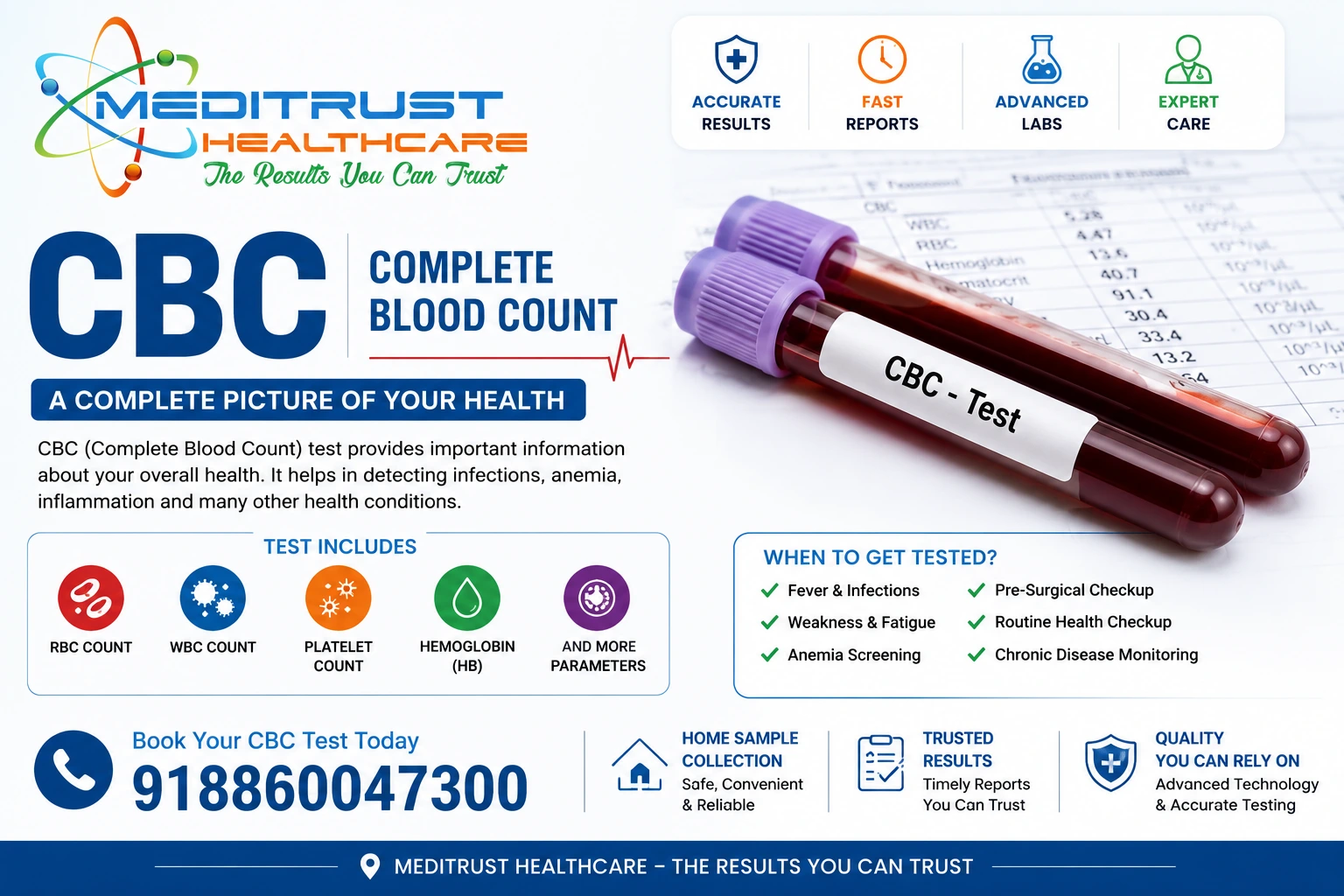
A Complete Blood Count (CBC) is one of the most commonly prescribed blood tests used to evaluate overall health and detect a wide range of medical conditions such as infections, anemia, inflammation, immune disorders, and blood-related diseases.
The CBC test measures different components of blood, including:
- Red Blood Cells (RBCs)
- White Blood Cells (WBCs)
- Hemoglobin (Hb)
- Hematocrit (HCT)
- Platelets
- Various blood cell indices
Doctors often recommend a CBC test during routine health checkups, illness evaluation, pre-surgical assessments, and ongoing medical treatment monitoring.
Why is a CBC Test Done?
A CBC test helps doctors:
- Detect infections
- Diagnose anemia
- Evaluate weakness or fatigue
- Monitor chronic diseases
- Assess immune system health
- Detect blood cancers or disorders
- Monitor treatment response
Components of CBC Test Explained
1. Red Blood Cells (RBC)
Red blood cells carry oxygen from the lungs to body tissues.
Normal RBC Range
- Men: 4.5–5.9 million cells/mcL
- Women: 4.1–5.1 million cells/mcL
High RBC Count May Indicate:
- Dehydration
- Lung disease
- Smoking
- Heart disease
Low RBC Count May Indicate:
- Anemia
- Blood loss
- Nutritional deficiencies
2. Hemoglobin (Hb)
Hemoglobin is the oxygen-carrying protein present in red blood cells.
Normal Hemoglobin Range
- Men: 13.5–17.5 g/dL
- Women: 12.0–15.5 g/dL
Low Hemoglobin Can Suggest:
- Iron deficiency anemia
- Vitamin deficiency
- Chronic disease
3. Hematocrit (HCT)
Hematocrit measures the percentage of red blood cells in blood.
Normal Range
- Men: 41%–53%
- Women: 36%–46%
Abnormal levels may indicate dehydration or anemia.
4. White Blood Cells (WBC)
White blood cells help the body fight infections.
Normal WBC Range
- 4,000–11,000 cells/mcL
High WBC Count May Indicate:
- Infection
- Inflammation
- Stress
- Leukemia
Low WBC Count May Indicate:
- Viral infections
- Bone marrow disorders
- Weak immune system
Types of White Blood Cells
Neutrophils
Fight bacterial infections.
Lymphocytes
Protect against viral infections.
Monocytes
Remove damaged cells and germs.
Eosinophils
Increase during allergies and parasitic infections.
Basophils
Play a role in allergic responses.
5. Platelet Count
Platelets help blood clot properly.
Normal Platelet Range
- 150,000–450,000 platelets/mcL
Low Platelets May Cause:
- Bleeding problems
- Viral infections
- Bone marrow disease
High Platelets May Indicate:
- Inflammation
- Infection
- Blood disorders
RBC Indices in CBC Test
MCV (Mean Corpuscular Volume)
Measures average size of RBCs.
- High MCV: Vitamin B12 deficiency
- Low MCV: Iron deficiency anemia
MCH (Mean Corpuscular Hemoglobin)
Measures hemoglobin amount per RBC.
MCHC (Mean Corpuscular Hemoglobin Concentration)
Measures concentration of hemoglobin in RBCs.
RDW (Red Cell Distribution Width)
Shows variation in RBC size.
High RDW may suggest anemia or nutritional deficiency.
Symptoms That May Require a CBC Test
Doctors may recommend a CBC test if you experience:
- Fever
- Weakness
- Fatigue
- Frequent infections
- Unexplained bruising
- Dizziness
- Pale skin
- Bleeding problems
Preparation Before CBC Test
The CBC test usually requires no special preparation.
However:
- Inform the doctor about medications
- Fasting may be required if combined with other tests
- Stay hydrated before sample collection
CBC Test Procedure
Step 1 – Blood Sample Collection
A healthcare professional collects blood from a vein in the arm using a sterile needle.
Step 2 – Laboratory Analysis
The sample is analyzed using automated blood analyzers.
Step 3 – Report Generation
Results are usually available within a few hours.
Conditions Diagnosed Through CBC Test
CBC testing helps diagnose:
- Anemia
- Bacterial infections
- Viral infections
- Leukemia
- Immune disorders
- Nutritional deficiencies
- Blood clotting disorders
Understanding CBC Test Results
CBC values should always be interpreted by a healthcare professional because several factors can influence blood counts.
Slight abnormalities may not always indicate serious disease.
CBC Test During Special Conditions
During Pregnancy
Pregnant women often undergo CBC testing to monitor anemia and infection risk.
During Fever or Infection
CBC helps identify bacterial or viral infections based on WBC patterns.
During Cancer Treatment
Doctors monitor blood cell counts during chemotherapy.
In Chronic Diseases
CBC helps track conditions such as kidney disease, liver disease, and autoimmune disorders.
Benefits of CBC Testing
- Early disease detection
- Quick and affordable screening
- Helps monitor ongoing treatment
- Provides overall health assessment
- Detects hidden infections or anemia
CBC Test at Meditrust Healthcare
At Meditrust Healthcare, we provide accurate and affordable CBC testing with professional sample collection, advanced laboratory technology, and fast reporting services.





Reviews
There are no reviews yet.