


Description
What is a Kidney Function Test (KFT)?
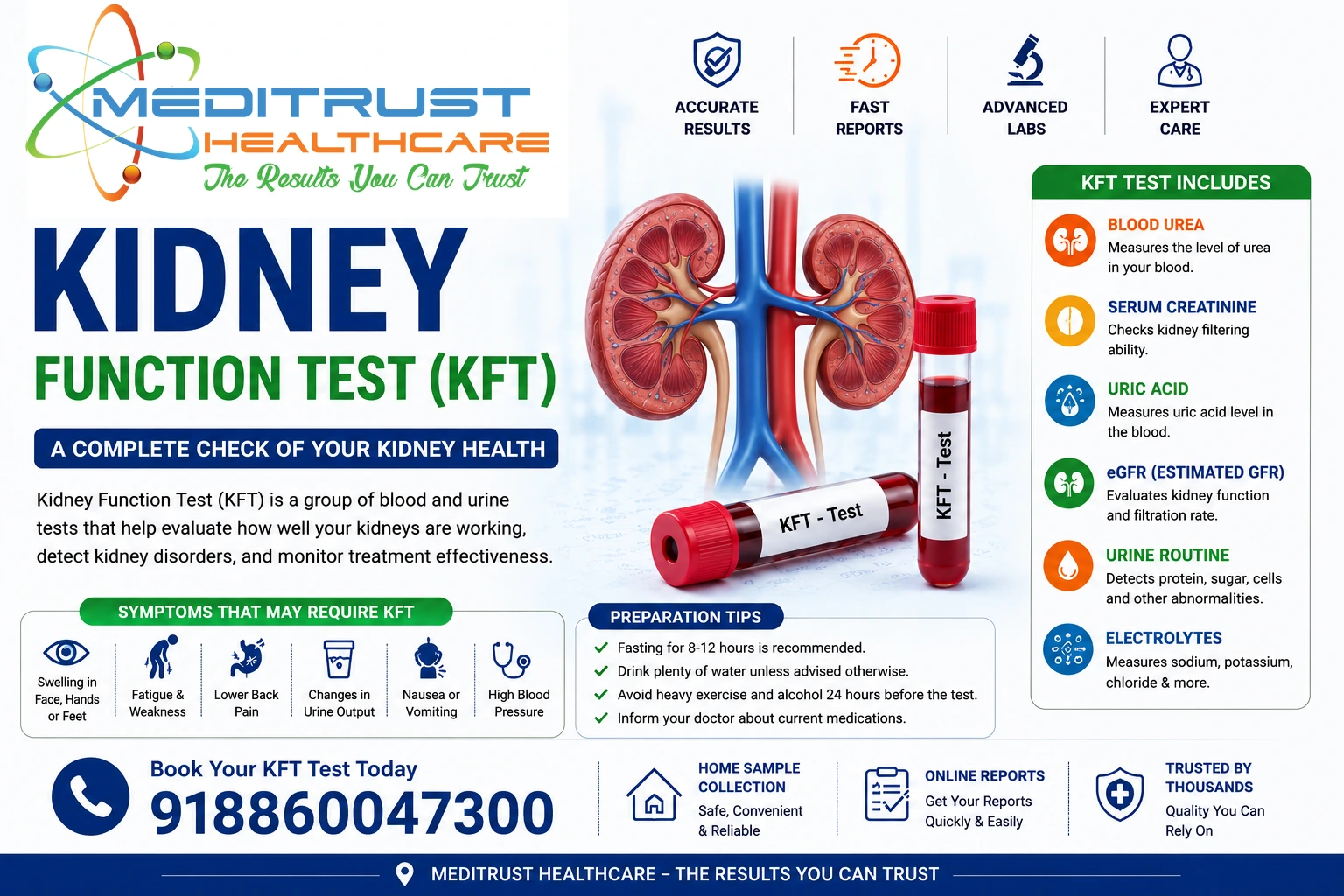
A Kidney Function Test (KFT) is a group of blood and urine tests used to evaluate how well the kidneys are functioning. These tests help detect kidney disease, monitor kidney health, and identify abnormalities related to filtration, waste removal, and electrolyte balance.
The kidneys play a vital role in:
- Removing waste products from blood
- Balancing body fluids
- Controlling blood pressure
- Maintaining electrolyte balance
- Producing hormones
- Supporting red blood cell production
A KFT helps doctors determine whether the kidneys are functioning normally or showing signs of damage.
Why is a KFT Test Done?
Doctors recommend Kidney Function Tests to:
- Detect kidney disease
- Monitor chronic kidney conditions
- Evaluate high blood pressure effects
- Check diabetes-related kidney damage
- Assess dehydration
- Monitor medication side effects
- Evaluate electrolyte imbalance
Components of Kidney Function Test (KFT)
A KFT panel includes several important parameters.
1. Serum Creatinine
Creatinine is a waste product produced by muscles and removed by kidneys.
Normal Creatinine Range
- Men: 0.7–1.3 mg/dL
- Women: 0.6–1.1 mg/dL
High Creatinine Levels May Indicate:
- Kidney disease
- Kidney infection
- Dehydration
- Reduced kidney filtration
2. Blood Urea Nitrogen (BUN)
Urea is produced during protein breakdown and eliminated through urine.
Normal BUN Range
- 7–20 mg/dL
High BUN Levels May Suggest:
- Kidney dysfunction
- Dehydration
- Heart failure
- High protein intake
3. Uric Acid
Uric acid forms during breakdown of purines in food and body cells.
Normal Range
- Men: 3.4–7.0 mg/dL
- Women: 2.4–6.0 mg/dL
High Uric Acid May Indicate:
- Kidney stones
- Gout
- Kidney disease
4. Estimated Glomerular Filtration Rate (eGFR)
eGFR measures how efficiently kidneys filter blood.
Normal eGFR
- Above 90 mL/min/1.73m²
Low eGFR May Suggest:
- Chronic kidney disease
- Reduced kidney function
5. Sodium (Na)
Sodium helps maintain fluid balance and nerve function.
Normal Range
- 135–145 mEq/L
Abnormal sodium levels may indicate kidney or dehydration issues.
6. Potassium (K)
Potassium supports muscle and heart function.
Normal Range
- 3.5–5.0 mEq/L
High potassium may occur in kidney disease and can affect heart rhythm.
7. Chloride
Chloride helps maintain acid-base balance.
Normal Range
- 96–106 mEq/L
8. Calcium
Kidneys help regulate calcium balance.
Normal Range
- 8.5–10.5 mg/dL
Abnormal levels may indicate kidney dysfunction.
Symptoms That May Require a KFT Test
Doctors may advise a KFT if you experience:
- Swelling in legs or face
- Fatigue
- Frequent urination
- Blood in urine
- Foamy urine
- High blood pressure
- Muscle cramps
- Nausea or vomiting
- Lower back pain
Preparation Before Kidney Function Test
Fasting
Some KFT panels may require fasting for 8–10 hours.
Inform About Medications
Certain medicines may affect kidney function results, including:
- Antibiotics
- Painkillers
- Blood pressure medicines
- Diuretics
Stay Hydrated
Proper hydration helps ensure accurate kidney function assessment.
What Happens During the KFT Procedure?
Step 1 – Blood Sample Collection
A blood sample is collected from a vein in the arm.
Step 2 – Urine Sample (If Required)
Some kidney evaluations also include urine testing.
Step 3 – Laboratory Analysis
The samples are analyzed using advanced diagnostic equipment.
Step 4 – Report Generation
Reports are generally available within a few hours or the same day.
Understanding KFT Test Results
KFT results should always be interpreted by a healthcare professional because multiple factors influence kidney function values.
High Creatinine or BUN Levels May Indicate
- Kidney disease
- Kidney infection
- Dehydration
- Reduced kidney filtration
- Urinary tract obstruction
Low eGFR May Suggest
- Chronic kidney disease
- Kidney damage
- Reduced filtration capacity
Conditions Diagnosed Through KFT
KFT testing helps diagnose:
- Chronic kidney disease (CKD)
- Kidney stones
- Kidney infection
- Diabetic nephropathy
- Hypertension-related kidney damage
- Electrolyte imbalance
- Acute kidney injury
KFT During Special Conditions
In Diabetes Patients
Regular KFT monitoring helps detect early kidney damage caused by diabetes.
In High Blood Pressure Patients
Hypertension can damage kidneys over time, requiring routine KFT testing.
During Pregnancy
KFT may help monitor pregnancy-related kidney complications.
In Elderly Individuals
Age-related decline in kidney function may require regular assessment.
Benefits of Kidney Function Testing
- Early detection of kidney disease
- Monitoring chronic kidney conditions
- Evaluating treatment effectiveness
- Detecting electrolyte imbalance
- Assessing overall kidney health
Who Should Get a KFT Test?
KFT testing is recommended for:
- Diabetic patients
- Hypertension patients
- Individuals with kidney disease symptoms
- Elderly people
- Patients taking long-term medications
- Individuals with urinary problems
KFT Test at Meditrust Healthcare
At Meditrust Healthcare, we provide accurate and affordable Kidney Function Testing with advanced laboratory technology, professional sample collection, and fast reporting services.







Reviews
There are no reviews yet.